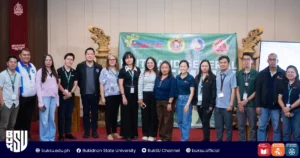
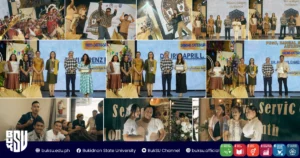
The Bukidnon State University (BukSU) Disaster Risk Reduction and Management Unit (DRRMU) conducted its second Anti-Fragility Culture Initiative learning session September 2, 2026, for faculty and staff of the Elementary Laboratory School (ELS) at the EDUHUB Campus.
The session focused on crisis management during active assailant incidents in schools, with discussions on threat recognition, emergency communication and the roles of school personnel during a crisis.
“For schools, emergencies do not always come in the form of earthquakes, floods, or fires. There are incidents that can happen without warning and can quickly put the safety of students, teachers, personnel and visitors at risk,” said BukSU DRRMU Head Mr. Rhondell Paraiso.
The Anti-Fragility Culture Initiative uses the concept of antifragility as part of its approach to preparedness. In risk and organizational studies, antifragility describes a system’s capacity to learn or improve from stress, uncertainty and disruption.
The DRRMU session addressed the need for school personnel to recognize developing threats, communicate information properly and understand their responsibilities when an emergency requires immediate action.
“During the session, we discussed the importance of awareness and early recognition of danger, proper communication, and the need for school personnel to understand their roles during a crisis. The discussion was not only about the incident itself, but also about what we can do before something happens,” Paraiso said.
The approach allows the university community to use orientations, drills and other activities as opportunities to identify areas that require further attention.
PITO Patrol provides an early warning system
The session also featured the ELS PITO Patrol, which involves Scouts and Junior Police in the school’s safety activities.
Ms. Rachel Joan T. Toledo, ELS Department Head, initiated the PITO Patrol as part of the school’s safety mechanism at the EDUHUB Campus.
The patrol uses whistles as an immediate means of raising an alarm and alerting members of the school community when a situation requires attention.
“The idea is simple: use the whistle as an immediate means of raising an alarm and making the school community aware that something needs attention,” Paraiso said.
“We do not always need sophisticated equipment to begin improving our safety systems. Sometimes, preparedness starts with something as basic as making sure that someone sees the danger, raises the alarm, and that people know what the alarm means,” he said.
The September 2 session followed the first Anti-Fragility Culture Initiative learning session conducted Aug. 3, 2026, which focused on Earthquake Safety Orientation and Drill.
The two sessions covered different emergency situations while addressing preparedness within the school community.
“Safety culture does not happen after one orientation or one drill. It takes repeated conversations, practice, simple but workable systems, and people who are willing to participate,” Paraiso said. (Rhondell M. Paraiso, BukSU DRRMU Head)