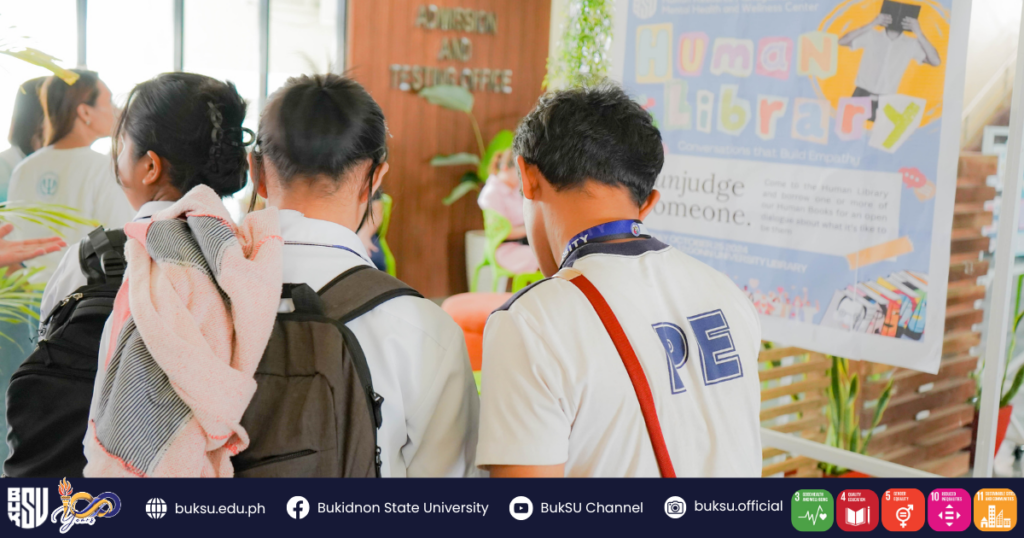








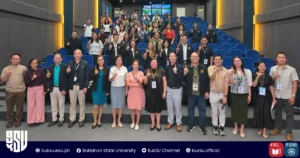
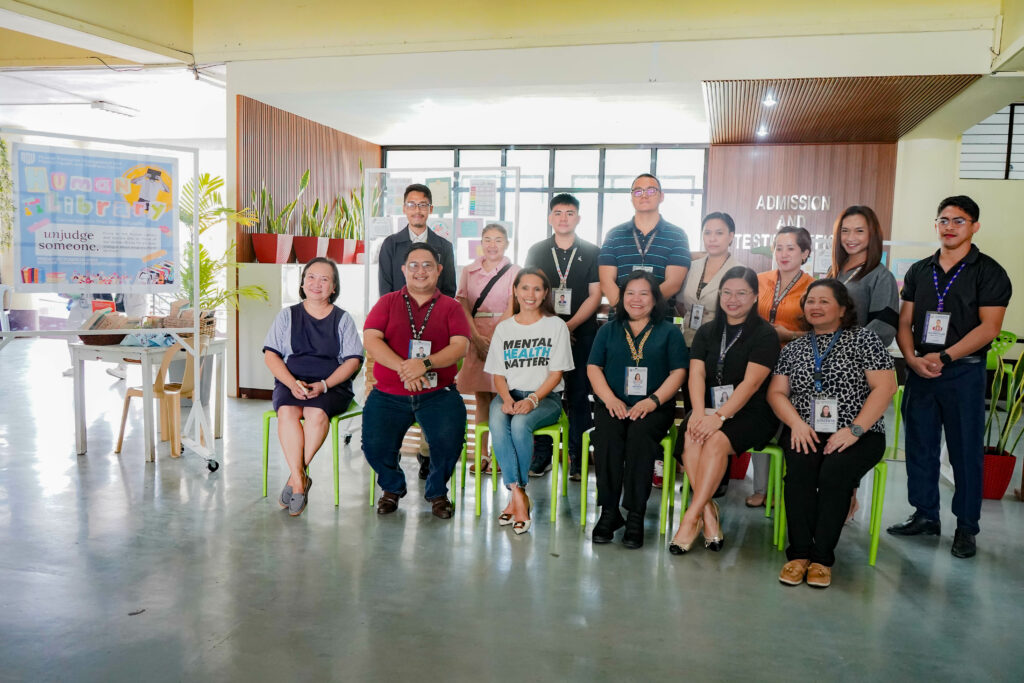
Bukidnon State University (BukSU) held a Human Library: Conversations that Build Empathy event aimed at promoting empathy, understanding, and inclusion among its employees, held on October 25, 2024 at the University Admission and Testing Unit lobby.
“The innovative activity provided a platform for individuals to share their personal experiences and stories, fostering meaningful conversations and breaking down stereotypes,” said Ms. Ma. Helena Pilar B. Sumbalan, Focal Person of BukSU’s Mental Health & Well-being Program.
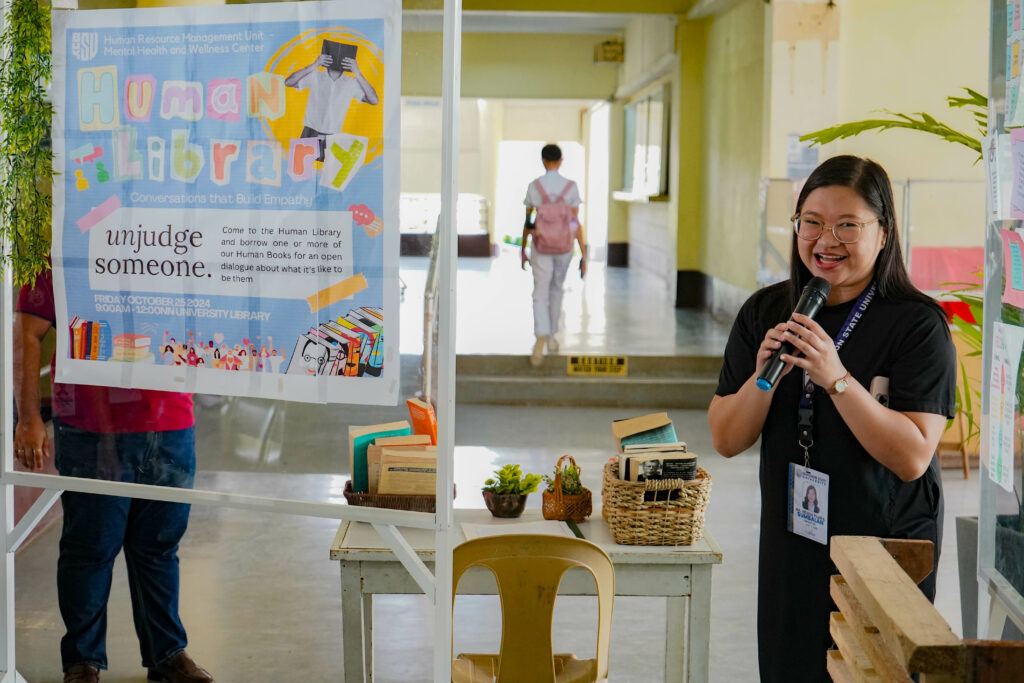
During the event, participants, known as “Human Books,” discussed a variety of topics including mental health challenges, single parenthood, cultural diversity, chronic illness, work-life balance, LGBTQ+ experiences, disability, and personal struggles.
“By sharing their personal stories, the Human Books hoped to encourage empathy and understanding among their colleagues,” Sumbalan added.
According to BukSU President Dr. Joy M. Mirasol, the university continues to prioritize the well-being of its employees, and initiatives like the Human Library in building a more empathetic and understanding community.
“I hope that this Human Library will be sustained. Thank you and congratulations HRMU for this inspiring initiative,” Mirasol said.
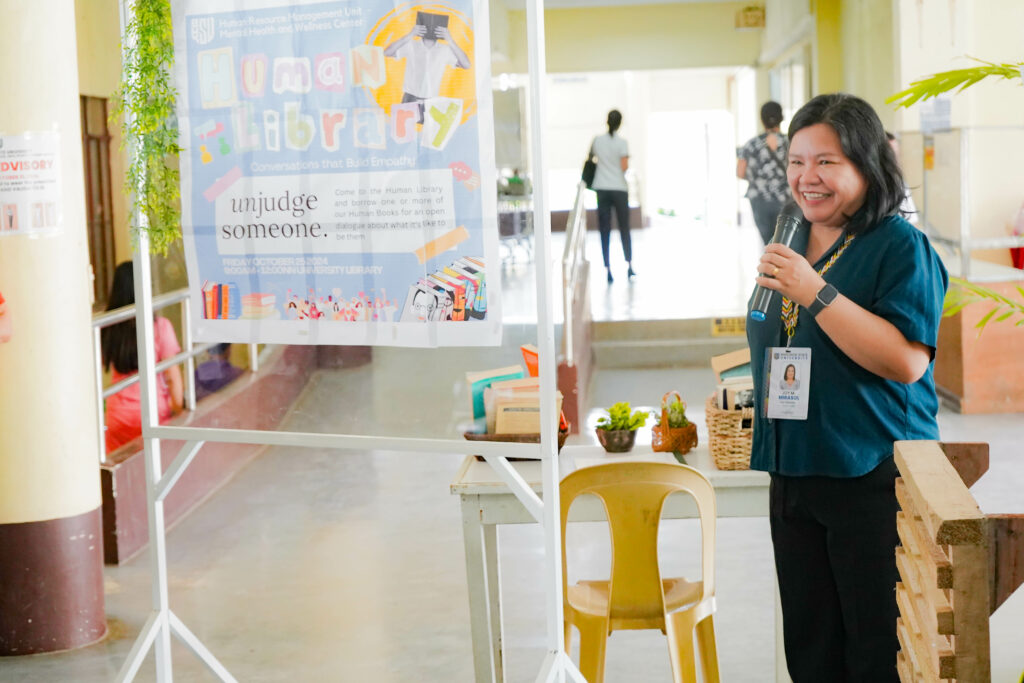
The concept of Human Library was adapted from a movement that first started in Denmark in 2000. It aims to address people’s prejudices by helping them to talk to those they would not normally meet. The movement uses a library analogy of lending people rather than books. (BukSU-Information Unit)
Bukidnon State University (BukSU) renewed its partnership with member institutions of the National Network of Normal Schools (3NS) on October 15, 2026, through a memorandum
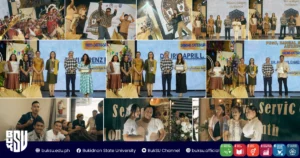
Bukidnon State University honored employees and offices whose integrity, excellence, and contributions exemplify public service as it capped its month-long celebration of the 126th Philippine
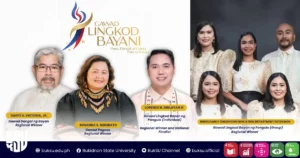
Bukidnon State University (BukSU) has four regional winners in the 2026 Civil Service Commission (CSC) Gawad Lingkod Bayani Awards, with one of its awardees advancing
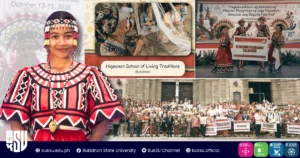
A Bukidnon State University (BukSU) student from Talakag, Bukidnon, joined more than 200 Indigenous people, cultural bearers, artists, educators and youth representatives from 41 Indigenous