

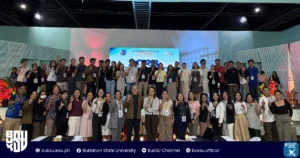



The University of the Philippines National College of Public Administration and Governance (UP NCPAG) conducted a nationwide knowledge-sharing and capacity-building caravan on November 19, 2026 to advance integrity, transparency, accountability, and adaptive governance across Philippine regions.
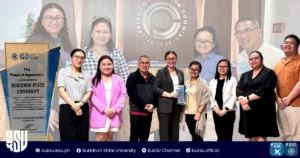
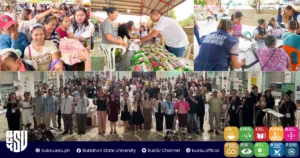
Bukidnon State University (BukSU) College of Public Administration and Governance participated in the Governance Reform, Innovation and Transformation Research Collaboratories (GRIT Labs), the flagship initiative—titled PAG-IWAG (Public Administration on the Go: Inculcating Whole-of-Society Accountability in Governance).
Drawing its name from the Hiligaynon and Cebuano word meaning “to illuminate,” the program aimed to translate academic public administration scholarship into practical, locally grounded tools.
The regional leg of the caravan has paired traditional academic discourse with interactive, technology-driven learning modules.
The sessions featured one to two masterclass lectures delivered by UP NCPAG faculty members, followed by local insights from BukSU.
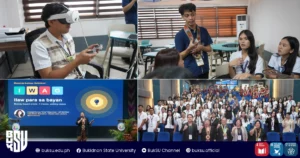
Participants engaged in hands-on playtesting of three specialized governance simulations developed by GRIT Labs: goVRnance (A virtual reality-based governance simulation experience), PagtaNOW (An interactive futures-sensing game), TALAMPAD (Trail of Actions: Leading And Making Principled Administrative Decisions): An interactive decision-making exercise. (BukSU – Information Unit)

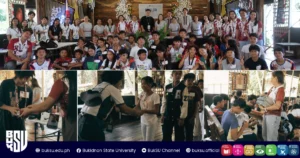
Students of Luyungan Indigenous People High School received notebooks, ballpens, clothing and snacks from two Bukidnon State University (BukSU) student organizations during an outreach program
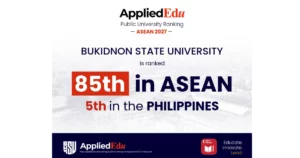
Bukidnon State University ranked 85th among 161 public universities across eight Southeast Asian countries and fifth among 32 Philippine universities in the AppliedEdu Public University
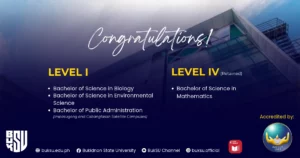
Bukidnon State University (BukSU) secured national accreditation for five academic programs across its main and satellite campuses after official evaluations by the Accrediting Agency of
Squash has long been prepared as a meal dish in the hinterland community where Jocame Remalin lives. During a community outreach activity in Barangay Can-ayan,