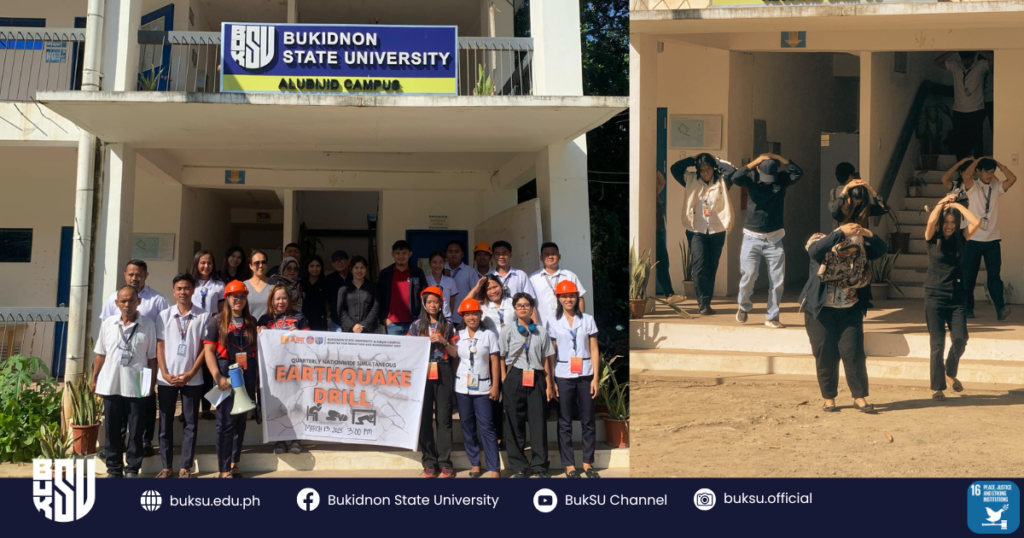





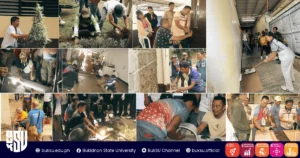

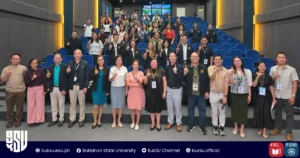
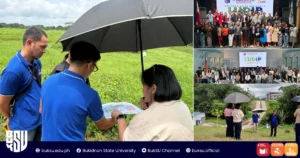


Bukidnon State University-Alubijid Campus participated in the first quarter 2025 Nationwide Simultaneous Earthquake Drill (NSED) on March 13, 2025 in consonance with the government’s initiative to intensify disaster preparedness.
The NSED is implemented quarterly to evaluate and enhance the emergency preparedness and response capabilities of communities, institutions, and agencies in the event of an earthquake.
“BukSU Alubijid took this proactive measure as an essential step in lowering risks, reducing casualties, and reinforcing safety during actual seismic events,” Dr. Eric Matthew L. Sinerpida
Campus Head said.
When the alarm sounded, Smart workforce of Alubijid, along with the students were prompted to carefully execute the “duck, cover, and hold” (DCH) method for one minute before moving to their designated evacuation areas. Every classroom is equipped with designated team leaders tasked with guiding their fellow students.
BukSU Alert Officers took charge of monitoring campus facilities to ensure no one is left inside the classrooms and offices. Additionally, the team examined the facilities for any signs of structural cracks.
“As the campus participates in this quarterly earthquake drill, it serves as an ongoing demonstration of its steadfast commitment to safety and disaster preparedness,” Dr. Sinerpida added.
BukSU Alubijid, along with the 15 satellites campuses participated the NSED. (With report fromm Arzel T. Villalon, BukSU Alubijid student writer)

Bukidnon State University (BukSU) opened Academic Year 2026–2027 with 9,317 registered students across its undergraduate and graduate programs. Females comprise nearly 62% of the university’s

The Accrediting Agency of Chartered Colleges and Universities in the Philippines (AACCUP) began its Online First Survey Accreditation Visit on July 27, 2026, for Bukidnon

The Bukidnon State University (BukSU) College of Medicine (COM) convened its inaugural class of 34 Doctor of Medicine students and their parents for a Student-Parent

A research initiative on how gender influences water access, sanitation, hygiene, and wastewater services in Philippine communities is the focus of a Memorandum of Agreement